Reduce prominence
Set selected ear structures closer to the head when projection is the concern.
External ear surgery · Newport Beach
Medically reviewed by Dr. T. Y. Steven Ip, MD, FACS, board certified plastic surgeon · Updated
Goals · Options · Recovery · Safety
Otoplasty changes selected cartilage and skin of the external ear to address prominence, asymmetry, congenital differences, or changes after injury. It does not affect hearing. Discuss what may be appropriate with board-certified plastic surgeon T. Y. Steven Ip, MD, FACS.
A guide for your decision
Dr. Ip evaluates ear size, projection, folds, conchal depth, lobules, asymmetry, scars, skin quality, age, and the patient’s own goals before selecting a technique.
Children are generally considered after the ears approach adult size and when they can cooperate with aftercare; adults need adequate health, realistic goals, and no active ear infection.
A consultation is for information—not pressure.
Ask questions, compare alternatives, understand recovery and risks, and decide whether treatment fits your goals.
Set selected ear structures closer to the head when projection is the concern.
Shape cartilage to improve selected contours without making the ears identical.
Repair selected differences while preserving a natural relationship to the face.
Your options
Technique, extent, anesthesia, and combination procedures depend on anatomy, health, goals, and the tradeoffs you are comfortable accepting.
Weakens or reshapes selected cartilage to create a more appropriate fold.
Uses internal sutures to hold cartilage in a planned position.
Removes selected tissue when excess conchal cartilage or skin contributes to prominence.
Detailed procedure guide
This expanded guide restores the original procedure-page detail while keeping recovery, risks, and recommendations subject to your personal consultation and current medical guidance.
Otoplasty reshapes selected cartilage and skin of the external ear. It may reduce prominence, create or refine an underdeveloped fold, address excess conchal cartilage, improve asymmetry, or repair selected changes after injury. It does not change hearing.
The operation is planned around the specific cartilage pattern rather than one standard maneuver.
Children may be considered once the ears approach adult size and the child can participate in the decision and cooperate with aftercare. Adults can also undergo otoplasty. Health, active infection, cartilage quality, scar history, and expectations should be reviewed for every patient.
Dressings and a protective headband may be used according to the surgical plan. Pressure, side sleeping, contact sports, and clothing that catches the ears may need to be limited while healing. Swelling and small differences between sides can take time to settle.
Before & after
These photographs show individual patients treated by Dr. Ip. Results vary, and photographs cannot predict your outcome.
View more patient results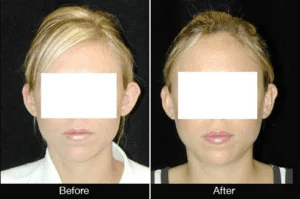
Recovery and informed consent
Local anesthesia with sedation or general anesthesia may be used depending on age, procedure, and patient factors.
ASPS ear surgery overviewRecovery
Bandages protect the ears early, followed by a headband when directed. Avoid pressure, side sleeping, contact sports, and clothing that catches the ears until cleared.
Risks
Risks include bleeding, infection, cartilage injury, asymmetry, overcorrection, undercorrection, suture problems, altered sensation, scarring, pain, and revision.
Results
Ear position changes are visible when dressings are removed, while swelling and minor asymmetry continue to settle. Results are intended to be long lasting.
Your path forward
Use the consultation to compare approaches, ask detailed questions, and understand the plan recommended for your goals and anatomy.
Choose the office that works for you and begin a private conversation with the practice.
Meet with Dr. Ip to review your concerns, anatomy, appropriate options, and realistic expectations.
Leave with a personalized recommendation and the information you need to choose your next step.
Ear Surgery (Otoplasty) FAQ
General education cannot replace an examination or individualized medical advice.
Request a ConsultationChildren are generally considered after the ears approach adult size and when they can cooperate with aftercare; adults need adequate health, realistic goals, and no active ear infection.
Dr. Ip reviews your goals, health history, anatomy, alternatives, expected recovery, risks, and realistic outcomes. The recommendation is individualized; a consultation does not obligate you to schedule treatment.
Local anesthesia with sedation or general anesthesia may be used depending on age, procedure, and patient factors.
Bandages protect the ears early, followed by a headband when directed. Avoid pressure, side sleeping, contact sports, and clothing that catches the ears until cleared.
Risks include bleeding, infection, cartilage injury, asymmetry, overcorrection, undercorrection, suture problems, altered sensation, scarring, pain, and revision.
Ear position changes are visible when dressings are removed, while swelling and minor asymmetry continue to settle. Results are intended to be long lasting.
A consultation is the next step for confirming candidacy, comparing options, and reviewing risks and realistic expectations.