Restore or add volume
Consider changes after pregnancy, weight change, aging, or naturally limited breast volume.
Breast augmentation · Newport Beach
Medically reviewed by Dr. T. Y. Steven Ip, MD, FACS, board certified plastic surgeon · Updated
Implant options · Placement · Recovery · Long-term care
Explore breast augmentation choices with clear guidance from board-certified plastic surgeon T. Y. Steven Ip, MD, FACS—without pressure to decide before you understand the tradeoffs.
The patient is the priority
Breast augmentation may add volume, restore fullness after pregnancy or weight change, improve symmetry, or adjust breast shape and proportion. The right plan depends on more than cup size. Your anatomy, existing tissue, skin quality, lifestyle, implant preferences, and tolerance for future monitoring all matter.
Dr. Ip’s role is to help you understand those variables, set realistic expectations, and determine whether augmentation—or an alternative such as a breast lift—fits the change you want to make.
Breast implants are not lifetime devices.
The FDA advises patients to consider the possibility of future monitoring, complications, removal, or replacement when making a decision.
Consider changes after pregnancy, weight change, aging, or naturally limited breast volume.
Explore implant size, profile, and placement in relation to your frame and existing tissue.
Understand benefits, limitations, monitoring, recovery, and alternatives before choosing surgery.
Implant choices
Size, profile, shape, shell, placement, and incision are considered together. Manufacturer labeling and the FDA patient decision checklist should be reviewed before surgery.
FDA-approved for augmentation age 18+
A silicone shell filled with sterile saline. A rupture is usually noticeable because the implant deflates.
FDA-approved for augmentation age 22+
A silicone shell filled with silicone gel. Silicone implants may feel more like natural tissue, but silent rupture requires ongoing monitoring.
Often called “gummy bear” implants
A form-stable silicone gel option available in different shapes and profiles. Device choice depends on anatomy, goals, and current manufacturer guidance.
Implant placement
The original clinical diagrams are preserved below. They are educational illustrations; the appropriate pocket depends on your anatomy and surgical plan.
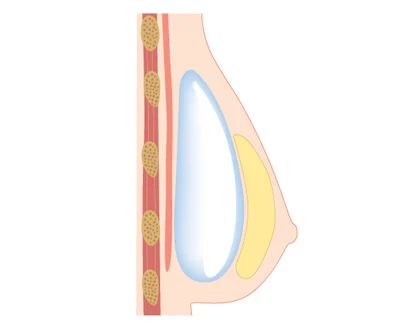
The implant is placed behind breast tissue and above the pectoral muscle. Existing tissue, implant visibility, and desired upper-pole fullness are part of the decision.
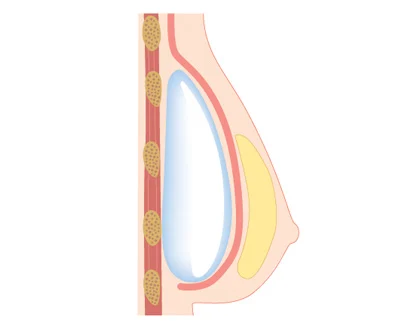
The implant is placed beneath the pectoral muscle. This may provide additional tissue coverage, depending on anatomy and the selected implant.
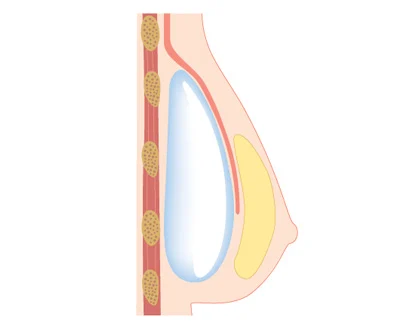
The upper implant is covered by muscle while the lower portion sits beneath breast tissue, combining features of submuscular and subglandular placement.
Incision planning
The original page’s incision visuals are retained. Your surgeon should explain which approaches are appropriate, the expected scar location, and the tradeoffs for your anatomy and implant choice.
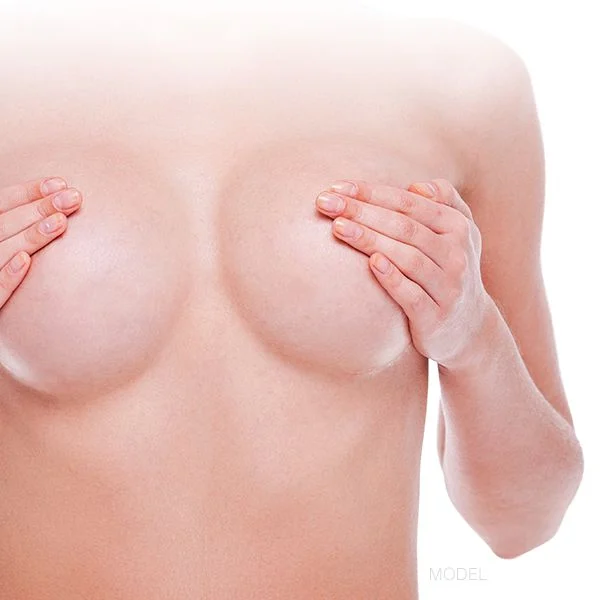
Breast fold
An incision in the fold beneath the breast. It provides direct access to the implant pocket and is commonly discussed for saline or silicone implants.
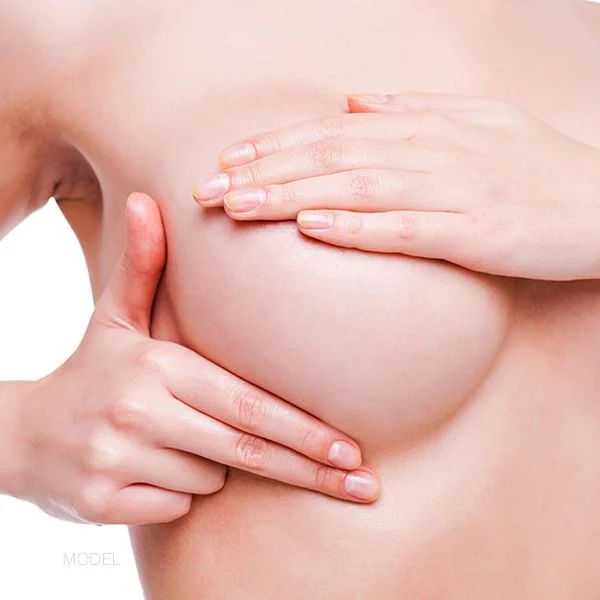
Areola edge
An incision along part of the areola border. Anatomy, implant size, sensation, breastfeeding considerations, and scarring are reviewed before selection.
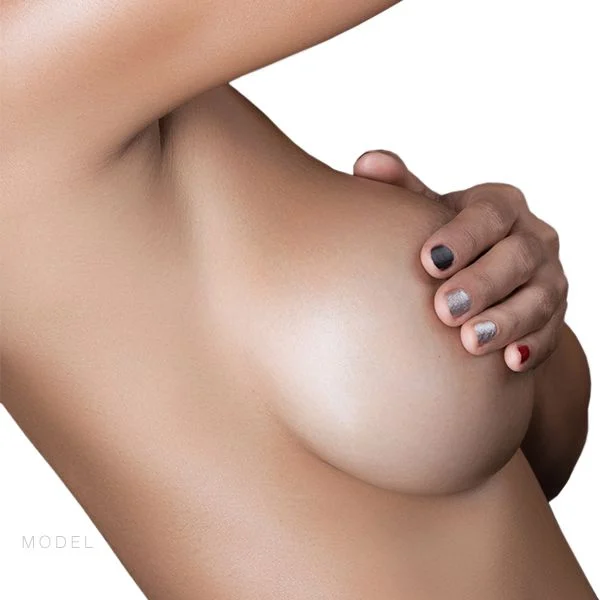
Armpit
An incision placed in the armpit. Suitability depends on implant type, anatomy, and the surgeon’s recommended technique.

Belly button — uncommon
Included because it appeared on the original page. This approach is not routinely used; ASPS notes that a belly-button approach is associated with a higher complication rate.
Before & after
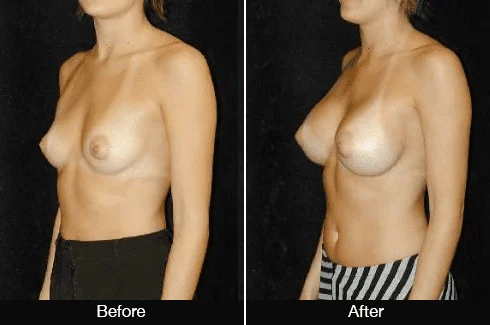
These photographs show individual patients treated by Dr. Ip. Results vary, and photographs cannot predict your outcome.
View the breast augmentation gallery

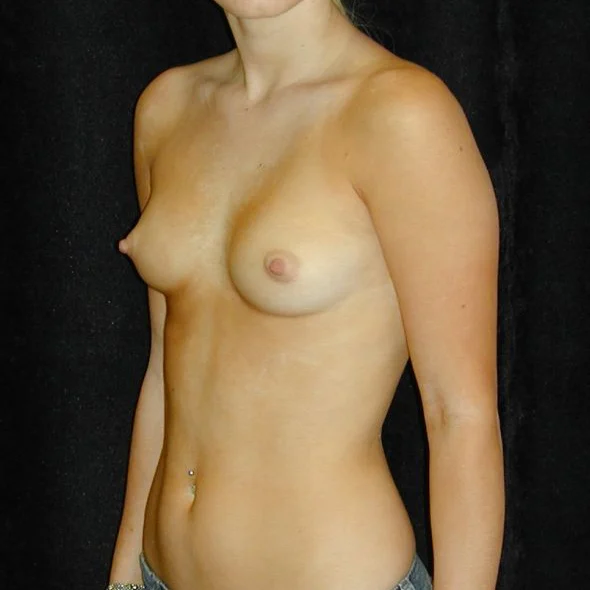
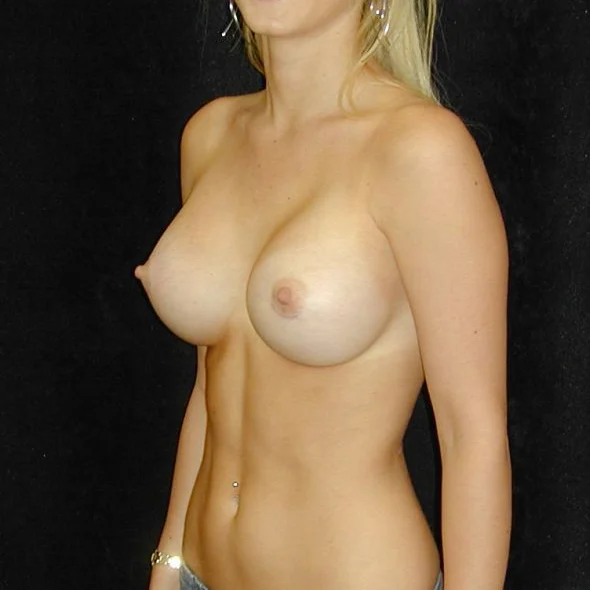


Recovery
The original page emphasized diet, activity, and medications. Those remain important, but instructions and timing should come from your surgical team.
Early recovery
Bruising, swelling, tightness, and discomfort are expected. Wear prescribed support garments and take only medications directed by the practice.
First weeks
Walking is commonly encouraged, while lifting and strenuous activity remain restricted. Return-to-work timing depends on your procedure and occupation.
Ongoing care
Healing and implant position change over time. Follow-up helps monitor recovery, address questions, and review long-term implant surveillance.
Postoperative medication reference
Medication choices are individualized. Take only prescriptions and over-the-counter products specifically approved by your surgical team.

Informed consent
Breast augmentation is elective surgery. Potential complications include capsular contracture, pain, infection, scarring, asymmetry, changes in sensation, rupture or deflation, reoperation, and implant removal. The FDA also provides information about uncommon implant-associated cancers and systemic symptoms reported by some patients.
Before surgery, review the implant manufacturer’s patient labeling and the FDA-required patient decision checklist with your surgeon. Ask how the selected device should be monitored and what symptoms should prompt evaluation.
Approximate cost
Breast augmentation with Dr. Ip costs approximately $8,000 to $12,000, including your implants and the surgeon, anesthesia and operating room fees.
Your path forward
Use the consultation to compare approaches, ask detailed questions, and understand the plan recommended for your goals and anatomy.
Choose the office that works for you and begin a private conversation with the practice.
Meet with Dr. Ip to review your concerns, anatomy, appropriate options, and realistic expectations.
Leave with a personalized recommendation and the information you need to choose your next step.
Breast augmentation FAQ
These answers provide general education. Your anatomy, health, implant choice, and surgical plan require a personal evaluation.
Request a ConsultationCandidates are generally adults seeking a change in breast volume, shape, symmetry, or proportion who are healthy enough for elective surgery and have realistic expectations. A personal consultation is needed to review your health history, anatomy, goals, and whether augmentation or another approach may be appropriate.
Both have a silicone outer shell. Saline implants contain sterile saltwater, while silicone implants contain silicone gel. The FDA approves saline implants for augmentation in women age 18 and older and silicone gel implants for augmentation in women age 22 and older. Shape, feel, monitoring, anatomy, and personal preferences are part of the decision.
An implant can add volume, but it may not adequately correct significant breast sagging or a low nipple position. Some patients may be better served by a breast lift, either alone or combined with augmentation. Dr. Ip can evaluate skin quality, nipple position, existing tissue, and goals during a consultation.
Common positions include above the pectoral muscle, below the muscle, and a dual-plane approach that combines elements of both. The recommendation depends on existing breast tissue, implant characteristics, anatomy, activity, and the result being considered.
Commonly discussed incisions include the fold beneath the breast, the edge of the areola, and the armpit. Incision choice depends on implant type, anatomy, desired enlargement, scarring considerations, and the surgeon’s recommendation. A belly-button approach is not routinely used and is associated with a higher complication rate.
Bruising, swelling, tightness, and activity restrictions are expected early in recovery. Instructions vary by patient and technique. Many patients return gradually to daily activities and work, while strenuous exercise and lifting remain restricted until cleared by the surgeon. Follow the practice’s specific postoperative instructions rather than a generic timeline.
No. The FDA states that breast implants are not lifetime devices. The chance of complications and additional surgery increases over time. Patients need ongoing follow-up, and silicone gel implants may require ultrasound or MRI screening for silent rupture according to current recommendations.
The consultation is a private discussion of your goals, medical history, prior procedures, medications, anatomy, implant and incision choices, recovery, risks, and realistic expectations. Dr. Ip can then recommend an individualized plan and explain alternatives, including when a breast lift or another procedure may be more appropriate.
A consultation is the next step for evaluating candidacy, selecting an implant and surgical approach, and reviewing risks and realistic expectations.